What Parts of You Are Still Pretending?
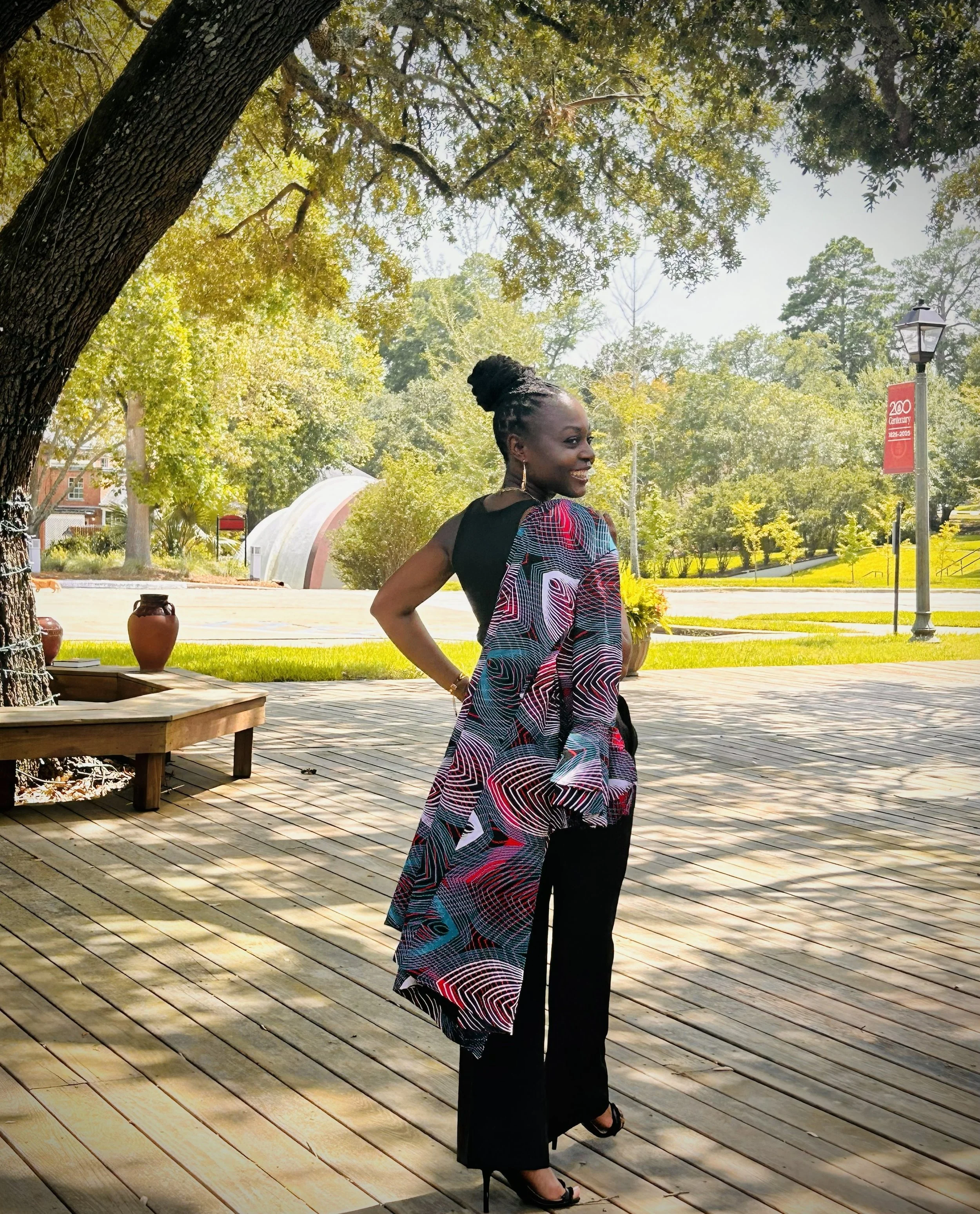
Have you ever looked in the mirror and realized that the person looking back at you was putting on a show?
Not because you wanted to deceive anyone, but because you had been performing for so long that you forgot where the act ended and your true self began?
That was me for over twenty years. One key ingredient to my disconnection was something as simple as my hair.
The Roots We Keep Hidden
If you walked into my childhood home in Mbalmayo, a small, vibrant city in Cameroon, you would see how customary it is for mothers to tend to their daughters' hair. My mother did mine until my elder sister took over. But by the time I was 13, my hair was labeled "unmanageable"—too coarse, too thick, too hard to detangle.
So, my mother did what so many do: she applied a chemical relaxer.
That single decision set off a cycle that followed me well into my 30s. Even after I migrated to the United States, joined the military, and became a mother myself, I was relaxing my hair every 4 to 6 weeks.
Why? Because a whisper had taken root deep inside me:
“If they see your natural hair, they won’t think you’re pretty.”
It was a quiet, exhausting fear. Whenever my natural roots started showing before my next salon visit, I would literally avoid my boyfriend because I was convinced I wasn’t attractive enough.
I lived in terror of going to work with my natural texture, constantly anxious that people would judge or reject me.
I remember being a young airman with barely enough money in my pocket. I couldn't afford a professional salon visit, but I was so desperate not to be seen in my natural state that I bought a box kit to relax it myself. I ended up burning my scalp and losing clumps of hair. Standing there in pain, I made a promise to myself: Save whatever it takes every 6 weeks, no matter what, to get it done by a professional.
Over time, my hair began breaking from the heavy chemicals; yet I kept paying the price—literally and emotionally—just to keep up the performance.
The Taming of a Little Girl
Looking back now, I see that this wasn't just about beauty habits; it was about culture and control.
Back home in Cameroon, parents often cut little girls’ hair short. The idea was to keep young girls focused on their education and achievement, rather than vanity. If you were considered stubborn or misbehaving, the threat was always hanging in the air: “If you keep acting up, we will cut your hair.” It was a cultural way of taming external attractiveness—a way to ensure a girl remained quiet, compliant, and "well-behaved." Losing your hair was a punishment.
Years later, now a mother, I started caring for my own little girl’s natural hair. I would look at her curls and feel my heart swell with love. "You are so beautiful," I would tell her.
And then, one day, the dissonance hit me like a wall; I was entirely disconnected from who I was meant to be.
“How could I look at my daughter and call her natural self beautiful, but look at my own mirror and refuse to say the same?”
Stepping Out into the Desert
The breakthrough came when I received military orders for deployment to Afghanistan.
I knew desert life would be tough on relaxed hair, and a quiet question began to form in my mind: What if I just let it grow out? What if I cut it all off?
In my African ancestral heritage, the weight of respect for our elders is immense. An adult woman cutting her hair short goes against long-held cultural expectations of female beauty and dignity. I knew my mother would be deeply upset. So, hiding behind a performance once more, I softened the blow with an excuse:
"Mom, I’m only cutting it because I don’t know if I will be able to find a hair salon in the middle of the desert! It will grow back."
I used that excuse to protect her feelings, but deep down, I knew the real truth: I just wanted to be free.
When I landed in Afghanistan with short hair, the transformation wasn't just visual—it was visceral. Have you ever thought about the literal weight of your hair? Feeling it gone was weightless. For the first time in my life, I could run my hands straight to my scalp and feel cold water washing over my skin. I didn't have to spend hours styling it or worry about how it would look when I woke up in the morning.
Best of all, the people I served with in the desert had never known me with long, straightened hair. They met me as I was. Nothing about me had changed except my willingness to stop hiding.
When someone gave me a compliment, I didn't catch myself thinking, “They’re lying; they just don't know the real me.” For the very first time, who I was on the inside matched who I showed on the outside.
Reclaiming Your Authentic Power
It took small, deliberate steps after that deployment to fully step into my adult power—to gently tell my family and culture:
“This is what I need in this season. I am not harming anyone—I am simply taking care of my soul.”
That simple shift gave me permission to grieve the parts of me that had been clinging to external approval. And as I grew into my natural locks alongside my daughter, that newfound authenticity bled into every other corner of my life. I found myself standing taller, leading with confidence at work, and advocating fiercely for myself and others.
This story isn't really about hair. It’s about the masks we wear and the performances we maintain just to feel safe, accepted, or worthy.
Reflection
I want to leave you with a few questions to carry with you today:
Where in your life are you still performing for an audience that isn't asking you to?
I'd love to hear your thoughts in the comments below.
I'm cheering you on.
Welcome home... to every part of you.
Share your reflections by replying to The Gentle Return newsletter or connect with me on Instagram.
Discover the book: Welcome Home: All the Pieces of Me. Coming soon…
